
INTRODUCTION
Noise is a sound that is unpleasant and loud. Noise pollution is when the noise levels are aggravating or harmful. Noise pollution is a health hazard that should be talked about more often. Our world is getting more and more noisy. Loud sounds are coming from inside (e.g., vacuum cleaners, white noise machines, music, dishwashers, washing machines, etc.) and outside (lawnmowers, airplanes, generators, power tools, music concerts, etc.) our homes. Most people carry their ‘noise’ everywhere they go, e.g., earphones, headphones, ear buds, etc. It is almost as if being silent is an aberration. Noise pollution is so ubiquitous and is slowly being normalized. However, noise pollution, like any other type, is harmful in the short and long term, especially in children. Prolonged exposure to harmful sounds causes hearing loss of different degrees.
According to the American Academy of Otolaryngology (ENT), about 10 million Americans suffer irreversible noise-induced hearing loss (NIHL). About 17 percent of teens (ages 12 to 19) have features that suggest NIHL in one or both ears.1
EFFECTS OF NOISE
Loud sounds damage the hair cells in the inner ear. These hair cells are delicate and susceptible, and they play a crucial role in our hearing process. They convert sound energy to electrical energy and transmit this to the brain. When they are damaged, our ability to hear is compromised.
The degree of harm caused by noise to a person is dependent on
- How loud the sound is, i.e., the Decibels
- How long one is exposed to the sound.
- How close one is to the source of the sound.
HOW LOUD SHOULD SOUNDS BE?
Sound is measured in Decibels (dBA). The louder the sound, the increased risk of hearing damage. Sounds at or below 70 dBA is safe. Sounds above 85dBA are harmful over time. E,g noise from Blenders and food processors ranges between 80 -90 dBA, lawn mowers 65 – 95 dBA, some baby rattles, squeaky toys, musical toys have noise level at 110 dBA, etc.
HOW LONG SHOULD A CHILD BE EXPOSED TO SOUND?
The longer one is exposed to loud sounds, the more damage to hearing increases. According to the NIH 2, noises can damage your hearing if they are:
- 85 dBA and last a few hours.
- 100 dBA and last at least 14 minutes.
- 110 dBA and last at least 2 minutes.
HOW CLOSE SHOULD A CHILD BE TO LOUD SOUNDS?
The closer one is to the loud sound source, the increased risk of hearing damage.
Loud noise can result in hearing loss. Hearing loss can affect children’s speech, learning, cognitive, social, and emotional development.
PREVENTION
- Lower the volume of devices.
- Stay far from the noise source.
- Teach your child to spend more time reading books than playing video games.
- Encourage outdoor play or family games rather than hours spent using earphones or headphones.
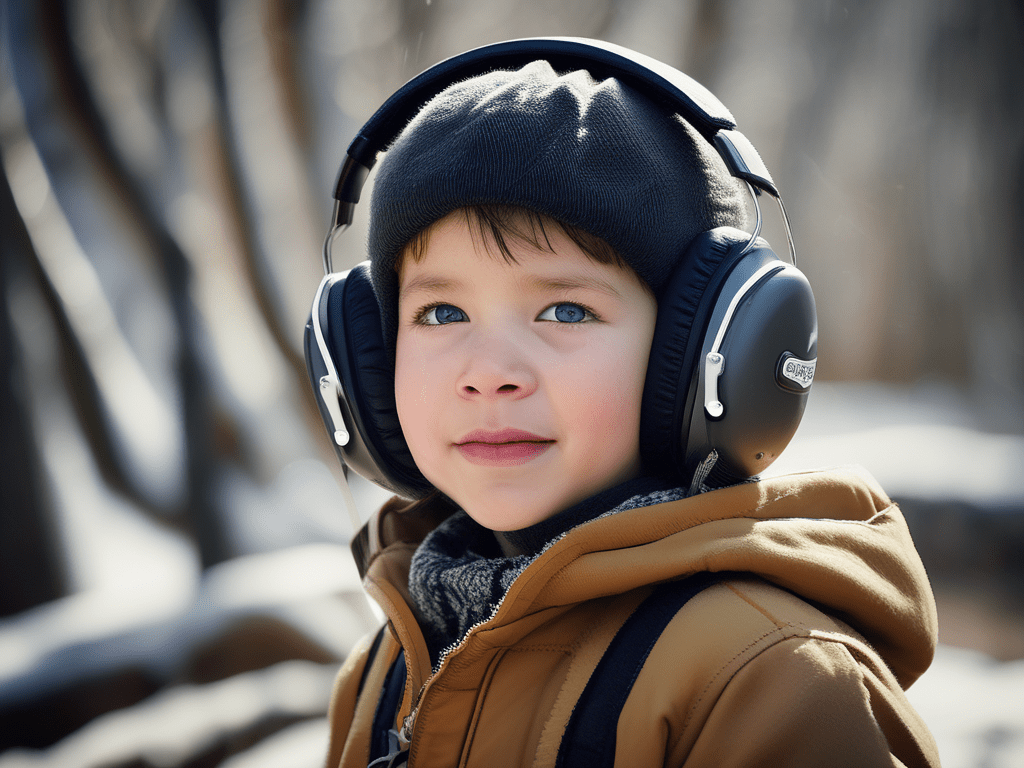
- Use ear protective devices like ear muffs and ear plugs.
- There is a free app developed by the World Health Organization (WHO) to help test one’s hearing hearWHO app (https://www.who.int/teams/noncommunicable-diseases/sensory-functions-disability-and-rehabilitation/hearwho)
Go through your home, pay attention to the sources of loud sounds, and change the appliances if possible.


 OUR KIDS DOC
Leave a comment